Cole Kendall
Cole Kendall
Wine is the song of the Earth to the Sky
Luigi Veronelli was a man of many aspects. The closest US counterparts I could find would be Barney Rosset and Richard Seaver of Grove Press, perhaps with some Robert Parker and Julia Child mixed in. I am still not an expert on Veronelli, so I await corrections from those who know his work better.
[Mild disclaimer: I did some translating for the event, trying to present the complexly simple thoughts of Veronelli in clear English. But other than having the chance to dine with Arturo in Bergamo and get an invite to the event I have received no compensation.]
Like Rosset and Seaver of Grove Press, Veronelli had a memorable battle with Coca Cola. The Grove Coca Cola incident is worth recounting: they published a book called "Diary of a Harlem Schoolteacher" and advertised that it was the "real thing." Coca Cola took offense at the appropriation of its slogan and Seaver responded: "We note with sympathy your feeling that you have a proprietary interest in the phrase "It's the real thing," and I can fully understand that the public might be confused by our use of the expression, and mistake a book by a Harlem schoolteacher for a six-pack of Coca-Cola. Accordingly, we have instructed all our salesmen to notify bookstores that whenever a customer comes in and asks for a copy of Diary of a Harlem Schoolteacher they should request the sales personnel to make sure that what the customer wants is the book, rather than a Coke. This, we think, should protect your interest and in no way harm ours." Letter
And of course both Grove and Veronelli battled to publish De Sade.
Veronelli battled Coca Cola in his own way, suing to stop production because of a technical issue and he managed to stop sales in Italy for a day.
Like Child, he promoted a way to eat well made food at home, though his battle was to bring regional Italian food to Italians everywhere and to try to get people to eat in a reasonable way.
Like Parker, he supported certain wineries and managed to raise their prices, changing the wine world (though mostly for the better, unlike RMP). Veronelli favored development of single vineyard wines, brought us the term "vino da meditazione" and promoted producers in obscure regions (e.g., Abruzzo) who made wines of extraordinary quality. He was also unlike Parker in most ways, refusing to attach numbers to wine.
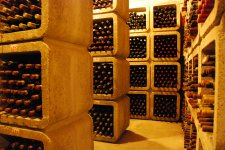
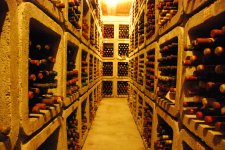
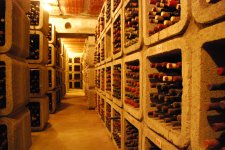
Veronelli assembled an amazing cellar, in quality, quantity and design. His cellar was designed with the use of the cement manhole inserts to hold his collection of tens of thousands of bottles (I believe something like 40+ thousand remain). His cellar included everything from wines that were made by very small local producers (without labels) to the top names in Italian wine along with wines from places he visited (he made important visits to France, the US and the country of Georgia).
The event at Astor was amazing in many respects. The family of Veronelli was there (his daughter, son-in-law and granddaughter who sang afterward) as well as wine producers from across Italy, who either knew Veronelli or whose family knew Veronelli. What was particularly impressive was that winemakers from across Italy appeared to talk about Veronelli and the usual Italian issues that cause troubles between people from various regions seemed forgotten.
In another forum John Morris has provided nice notes about the wines: Another website
Since I am not a brilliant note writer, I will only give a few impressions. The wines were all in amazing condition, seeming younger than would be possible so perhaps we should all spend a few years in Veronelli's cantina to slow down the aging process. Astor provided a fantastic place for a tasting; I felt like I was in some kind of elite wine school with fabulous seating, a private sink and good a/v equipment.
Bruno Giacosa Pinot Nero Spumante Extra Brut 1993: I must have known at some point that Giacosa made a bubbly white, but I have never seen it. My experience with Piemontese sparkling whites has not been overwhelming, so I fully expected this to be thin and tired, but instead it was fresh as a daisy and really quite lovely. Veronelli apparently loved this wine and bought it regularly, possibly an explanation why not much got to the DC market.
Emidio Pepe Montepulciano d'Abruzzo 1975: The man and the wine are incredible. I was lucky that Pepe's apparent inability to chat in English allowed me to have a few minutes with him to talk about wine and other things. He revealed that of recent vintages he thought I should look out for 2010 and 2013. But will I have to live another 30+ years to enjoy them as much I enjoyed this 1975?
Barolo Monprivato G. Mascarello 1970: It was an honor to taste this wine, the first single vineyard Barolo, that was more or less the basis of an intergenerational bet. Gepin Mascarello believed that blended Barolo was better than wine made from any individual vineyard. His father (Morissio) and son (Mauro) disagreed. Veronelli, naturally sided with M and M and in 1970 they tried it and M and M won the bet.
Maculan Torcolato Passito 1982: Veronelli was a great promoter of the obscure DOC (Breganze) and the even more obscure grape (a secret known to Bob Semon and only a few others, Vespaiola). A great wine that seems unchanged 35 years later. I got to ask Angela Maculan if any of their sweet wines evolve and she admitted that some of them do seem to change over time.
Thanks again to all concerned (and to the participants of the dinner afterward, including Manuel Biava who poured old and new vintages of his Moscato di Scanzo (and the incredible grappa), Diana Lenzi from Fattoria di Petroia and Enrico from Azienda Rizzi who shared his art with us.
Luigi Veronelli was a man of many aspects. The closest US counterparts I could find would be Barney Rosset and Richard Seaver of Grove Press, perhaps with some Robert Parker and Julia Child mixed in. I am still not an expert on Veronelli, so I await corrections from those who know his work better.
[Mild disclaimer: I did some translating for the event, trying to present the complexly simple thoughts of Veronelli in clear English. But other than having the chance to dine with Arturo in Bergamo and get an invite to the event I have received no compensation.]
Like Rosset and Seaver of Grove Press, Veronelli had a memorable battle with Coca Cola. The Grove Coca Cola incident is worth recounting: they published a book called "Diary of a Harlem Schoolteacher" and advertised that it was the "real thing." Coca Cola took offense at the appropriation of its slogan and Seaver responded: "We note with sympathy your feeling that you have a proprietary interest in the phrase "It's the real thing," and I can fully understand that the public might be confused by our use of the expression, and mistake a book by a Harlem schoolteacher for a six-pack of Coca-Cola. Accordingly, we have instructed all our salesmen to notify bookstores that whenever a customer comes in and asks for a copy of Diary of a Harlem Schoolteacher they should request the sales personnel to make sure that what the customer wants is the book, rather than a Coke. This, we think, should protect your interest and in no way harm ours." Letter
And of course both Grove and Veronelli battled to publish De Sade.
Veronelli battled Coca Cola in his own way, suing to stop production because of a technical issue and he managed to stop sales in Italy for a day.
Like Child, he promoted a way to eat well made food at home, though his battle was to bring regional Italian food to Italians everywhere and to try to get people to eat in a reasonable way.
Like Parker, he supported certain wineries and managed to raise their prices, changing the wine world (though mostly for the better, unlike RMP). Veronelli favored development of single vineyard wines, brought us the term "vino da meditazione" and promoted producers in obscure regions (e.g., Abruzzo) who made wines of extraordinary quality. He was also unlike Parker in most ways, refusing to attach numbers to wine.
Veronelli assembled an amazing cellar, in quality, quantity and design. His cellar was designed with the use of the cement manhole inserts to hold his collection of tens of thousands of bottles (I believe something like 40+ thousand remain). His cellar included everything from wines that were made by very small local producers (without labels) to the top names in Italian wine along with wines from places he visited (he made important visits to France, the US and the country of Georgia).
The event at Astor was amazing in many respects. The family of Veronelli was there (his daughter, son-in-law and granddaughter who sang afterward) as well as wine producers from across Italy, who either knew Veronelli or whose family knew Veronelli. What was particularly impressive was that winemakers from across Italy appeared to talk about Veronelli and the usual Italian issues that cause troubles between people from various regions seemed forgotten.
In another forum John Morris has provided nice notes about the wines: Another website
Since I am not a brilliant note writer, I will only give a few impressions. The wines were all in amazing condition, seeming younger than would be possible so perhaps we should all spend a few years in Veronelli's cantina to slow down the aging process. Astor provided a fantastic place for a tasting; I felt like I was in some kind of elite wine school with fabulous seating, a private sink and good a/v equipment.
Bruno Giacosa Pinot Nero Spumante Extra Brut 1993: I must have known at some point that Giacosa made a bubbly white, but I have never seen it. My experience with Piemontese sparkling whites has not been overwhelming, so I fully expected this to be thin and tired, but instead it was fresh as a daisy and really quite lovely. Veronelli apparently loved this wine and bought it regularly, possibly an explanation why not much got to the DC market.
Emidio Pepe Montepulciano d'Abruzzo 1975: The man and the wine are incredible. I was lucky that Pepe's apparent inability to chat in English allowed me to have a few minutes with him to talk about wine and other things. He revealed that of recent vintages he thought I should look out for 2010 and 2013. But will I have to live another 30+ years to enjoy them as much I enjoyed this 1975?
Barolo Monprivato G. Mascarello 1970: It was an honor to taste this wine, the first single vineyard Barolo, that was more or less the basis of an intergenerational bet. Gepin Mascarello believed that blended Barolo was better than wine made from any individual vineyard. His father (Morissio) and son (Mauro) disagreed. Veronelli, naturally sided with M and M and in 1970 they tried it and M and M won the bet.
Maculan Torcolato Passito 1982: Veronelli was a great promoter of the obscure DOC (Breganze) and the even more obscure grape (a secret known to Bob Semon and only a few others, Vespaiola). A great wine that seems unchanged 35 years later. I got to ask Angela Maculan if any of their sweet wines evolve and she admitted that some of them do seem to change over time.
Thanks again to all concerned (and to the participants of the dinner afterward, including Manuel Biava who poured old and new vintages of his Moscato di Scanzo (and the incredible grappa), Diana Lenzi from Fattoria di Petroia and Enrico from Azienda Rizzi who shared his art with us.