CWD: What did you drink last night (or whenever)?

originally posted by Jayson Cohen:


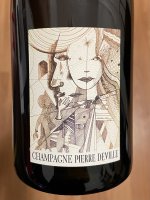
I’ll out a new producer for me, now imported into the NY area by Bryan Garcia (corkhoarder), Pierre Deville from Verzy. I loved this 2019 50/50 blend of Pinot Noir and Chardonnay; incisive Champagne that underwent full malo and was finished with four grams, bucking the trend of relying on long lies aging and zero dosage. A breath of fresh air. There is not much of it if you are curious: only a small fraction of the small production comes to the States.

Pavel, one perhaps for our next meet up. I bought a bottle.

IMG_5345.jpg
IMG_5339.jpg

I had the Deville last night at the SF Flatiron end-of-year champagne tasting -- exactly as you described. A nice balance of fresh incisiveness without being overly lean or acid forward.

The California importer also had a 2019 Adrien Renoir Les Epinettes at the table. Another Verzy wine (according to the CA importer, the Deville wine also has some fruit from the Les Epinettes lieux dit).

All I can say about the Renoir is wow. Seriously impressed by level of depth and complexity of the wine.

The grower champagne scene is extremely exciting. There were so many great wines from producers I'm not familiar with last night (Antoine Bouvet, Etienne Sandrin, Benoit Dehu, Legrand-Latour, Vincent Couche, Caze-Thibaut, to name a few). I don't feel too bad about missing the boat on Selosse and Prevost, lol.
 

Attachments

  • IMG_5345.jpg
    IMG_5345.jpg
    1.4 MB · Views: 0
originally posted by Oswaldo Costa:
originally posted by Claude Kolm:
originally posted by Oswaldo Costa:
originally posted by Jonathan Loesberg:
originally posted by Oswaldo Costa:
Not too shabby Chablis2013 Laurent Tribut 1er Cru Beauroy 13.0%
A smidgen of minerality, a hint of butteriness, a whiff of oxidativeness, and gobs of fennel. Only the butteriness (from variety, not barrel) was unwelcome, partly because I expected a Tribut to be more Shaker-Quaker, or at least generic Protestant. Maybe Chablis and me, or even Burgundian Chardonnay as a category, we've lost that loving feeling. But Jura still often pleases, so...

How can you tell where the butter comes from? With Chardonnay, I would guess malolactic, but it would be easy to prove me wrong or right if the domaine had a web page that described vinification.

I can't always be 100% sure, but I sense a significant difference between the aroma and/or flavor of new or newish oak, which can be found in any white made from any variety, and a different kind of villainous vanilla that I nearly always find in every Chardonnay that I taste, including unoaked or neutral-oaked ones from Louis Michel and Eric Texier, or even Ganevat. So, I guess I internalized these latter imprints. It's not just a pure taste sensation, there is a kind of viscosity attached.

I don't know if it results from malo. So many whites that undergo malo don't have it, but it could, of course, be the result of how it impacts this particular variety. Would be instructive if I could taste a barrel of unoaked Chardonnay that underwent malo next to one where the winemaker blocked it.
Cork definitely gives of an oak-influenced overtone that can be especially noticeable with rather neutral grapes such as Weissburgunder (Pinot Blanc) and Chardonnay. Try some screw-capped Chardonnays and see if you still get it.

Not so easy to find around these parts, so just ordered a bottle of Felton Road.

Hoped to break the streak with a 2017 Moreau-Naudet Chablis last night, but it was a bit wishy-washy.

Last night we finally got around to the 2019 Felton Road Bannockburn Chardonnay 13,5% (under screw-cap) and, alas, the butteriness was clearly there, in aroma and flavor. But no sense of oak flavor or texture (except, conceivably, for a slight smokiness that could come from toast). That said, it was rewarding to step outside our usual waters. Very fresh and balanced, with impeccable varietal tipicité (I wouldn't know about kiwi tipicité), and went particularly well with our food (plant-based, these days; I also swapped my diesel Mini for an electric). Recommended, if anyone can find some.
 
originally posted by Oswaldo Costa:
originally posted by Claude Kolm:
originally posted by Oswaldo Costa:
originally posted by Jonathan Loesberg:
originally posted by Oswaldo Costa:
Not too shabby Chablis2013 Laurent Tribut 1er Cru Beauroy 13.0%
A smidgen of minerality, a hint of butteriness, a whiff of oxidativeness, and gobs of fennel. Only the butteriness (from variety, not barrel) was unwelcome, partly because I expected a Tribut to be more Shaker-Quaker, or at least generic Protestant. Maybe Chablis and me, or even Burgundian Chardonnay as a category, we've lost that loving feeling. But Jura still often pleases, so...

How can you tell where the butter comes from? With Chardonnay, I would guess malolactic, but it would be easy to prove me wrong or right if the domaine had a web page that described vinification.

I can't always be 100% sure, but I sense a significant difference between the aroma and/or flavor of new or newish oak, which can be found in any white made from any variety, and a different kind of villainous vanilla that I nearly always find in every Chardonnay that I taste, including unoaked or neutral-oaked ones from Louis Michel and Eric Texier, or even Ganevat. So, I guess I internalized these latter imprints. It's not just a pure taste sensation, there is a kind of viscosity attached.

I don't know if it results from malo. So many whites that undergo malo don't have it, but it could, of course, be the result of how it impacts this particular variety. Would be instructive if I could taste a barrel of unoaked Chardonnay that underwent malo next to one where the winemaker blocked it.
Cork definitely gives of an oak-influenced overtone that can be especially noticeable with rather neutral grapes such as Weissburgunder (Pinot Blanc) and Chardonnay. Try some screw-capped Chardonnays and see if you still get it.

Not so easy to find around these parts, so just ordered a bottle of Felton Road.

Hoped to break the streak with a 2017 Moreau-Naudet Chablis last night, but it was a bit wishy-washy.

Last night we finally got around to the 2019 Felton Road Bannockburn Chardonnay 13,5% (under screw-cap) and, alas, the butteriness was clearly there, in aroma and flavor. But no sense of oak flavor or texture (except, conceivably, for a slight smokiness that could come from toast). That said, it was rewarding to step outside our usual waters. Very fresh and balanced, with impeccable varietal tipicité (I wouldn't know about kiwi tipicité), and went particularly well with our food (plant-based, these days; I also swapped my diesel Mini for an electric). Recommended, if anyone can find some.
Did the wine undergo malo? That can cause buttery-type aromas.
 
originally posted by Claude Kolm:
originally posted by Oswaldo Costa:
originally posted by Claude Kolm:
originally posted by Oswaldo Costa:
originally posted by Jonathan Loesberg:
originally posted by Oswaldo Costa:
Not too shabby Chablis2013 Laurent Tribut 1er Cru Beauroy 13.0%
A smidgen of minerality, a hint of butteriness, a whiff of oxidativeness, and gobs of fennel. Only the butteriness (from variety, not barrel) was unwelcome, partly because I expected a Tribut to be more Shaker-Quaker, or at least generic Protestant. Maybe Chablis and me, or even Burgundian Chardonnay as a category, we've lost that loving feeling. But Jura still often pleases, so...

How can you tell where the butter comes from? With Chardonnay, I would guess malolactic, but it would be easy to prove me wrong or right if the domaine had a web page that described vinification.

I can't always be 100% sure, but I sense a significant difference between the aroma and/or flavor of new or newish oak, which can be found in any white made from any variety, and a different kind of villainous vanilla that I nearly always find in every Chardonnay that I taste, including unoaked or neutral-oaked ones from Louis Michel and Eric Texier, or even Ganevat. So, I guess I internalized these latter imprints. It's not just a pure taste sensation, there is a kind of viscosity attached.

I don't know if it results from malo. So many whites that undergo malo don't have it, but it could, of course, be the result of how it impacts this particular variety. Would be instructive if I could taste a barrel of unoaked Chardonnay that underwent malo next to one where the winemaker blocked it.
Cork definitely gives of an oak-influenced overtone that can be especially noticeable with rather neutral grapes such as Weissburgunder (Pinot Blanc) and Chardonnay. Try some screw-capped Chardonnays and see if you still get it.

Not so easy to find around these parts, so just ordered a bottle of Felton Road.

Hoped to break the streak with a 2017 Moreau-Naudet Chablis last night, but it was a bit wishy-washy.

Last night we finally got around to the 2019 Felton Road Bannockburn Chardonnay 13,5% (under screw-cap) and, alas, the butteriness was clearly there, in aroma and flavor. But no sense of oak flavor or texture (except, conceivably, for a slight smokiness that could come from toast). That said, it was rewarding to step outside our usual waters. Very fresh and balanced, with impeccable varietal tipicité (I wouldn't know about kiwi tipicité), and went particularly well with our food (plant-based, these days; I also swapped my diesel Mini for an electric). Recommended, if anyone can find some.
Did the wine undergo malo? That can cause buttery-type aromas.

Found this in the Felton Road website:

Fermentation in French oak (mostly well-seasoned barrels with less than 10% new) with indigenous yeasts has produced a wine with considerable complexity. A long and complete indigenous malolactic fermentation with only periodic stirring of the lees (batonnage), combined with 11 months on full lees, has softened the acid for a rich and complex mouthfeel.

So, yes, an increase in the % of lactic could be the cause, and is often suggested as so by those here traumatized by the induced diacetyl excesses of Napa Chardonnays (which I have thankfully been spared).

But I do wonder why I seem to nearly always find it in Chardonnay (for sure in Burgundy, less so in the Jura) and almost never find it in other white grapes pretty much from any part of the world. I find it hard to believe that, say, in the Loire producers systematically block Chenin malos whereas in Burgundy and the Rhône/Ardèche they don't for Chardonnay.
 
"But I do wonder why I seem to nearly always find it in Chardonnay (for sure in Burgundy, less so in the Jura) and almost never find it in other white grapes pretty much from any part of the world. I find it hard to believe that, say, in the Loire producers systematically block Chenin malos whereas in Burgundy and the Rhône/Ardèche they don't for Chardonnay."

from 30+ years ago, ed behr in his article in 'art of eating' on vouvray mentioned that during a particularly warm season, some vouvray producers found their wines going thru malolatic fermentation and they didn't even know what it was. with the coldness of the caves and use of sulfur and bottling done within a year of harvest and ML was never even given a chance.

how much different things are now i don't know, but the use of sulfur has dropped and seasons are warmer
 
originally posted by robert ames:

"But I do wonder why I seem to nearly always find it in Chardonnay (for sure in Burgundy, less so in the Jura) and almost never find it in other white grapes pretty much from any part of the world. I find it hard to believe that, say, in the Loire producers systematically block Chenin malos whereas in Burgundy and the Rhône/Ardèche they don't for Chardonnay."

from 30+ years ago, ed behr in his article in 'art of eating' on vouvray mentioned that during a particularly warm season, some vouvray producers found their wines going thru malolatic fermentation and they didn't even know what it was. with the coldness of the caves and use of sulfur and bottling done within a year of harvest and ML was never even given a chance.

how much different things are now i don't know, but the use of sulfur has dropped and seasons are warmer

Right, but I would expect the average Burgundian cellar to be, if anything, a touch colder than the average (inland) Ligerian cellar (they were more or less the same, in my experience of a dozen or so of each). So, back in the day, Burgundian Chardonnay would have been as "protected" from mlf as Loire Chenin.
 
originally posted by Oswaldo Costa:
Right, but I would expect the average Burgundian cellar to be, if anything, a touch colder than the average (inland) Ligerian cellar (they were more or less the same, in my experience of a dozen or so of each). So, back in the day, Burgundian Chardonnay would have been as "protected" from mlf as Loire Chenin.
I don't think this is correct. Burgundian winmakers know all about malo.
 
originally posted by Jeff Grossman:
originally posted by Oswaldo Costa:
Right, but I would expect the average Burgundian cellar to be, if anything, a touch colder than the average (inland) Ligerian cellar (they were more or less the same, in my experience of a dozen or so of each). So, back in the day, Burgundian Chardonnay would have been as "protected" from mlf as Loire Chenin.
I don't think this is correct. Burgundian winmakers know all about malo.

Totally open to being wrong, but are you inferring that Burgundian cellars are warmer? Otherwise, how would they "know all about malo" when Loire cellars were (supposedly) not seeing it?
 
But Jeff is empirically correct. Malo is frequent in Burgundy and not in the loire. On the other hand, it is rare in Chablis and Chablis doesn't taste buttery. There is an old saw about diagnosing:if you hear hoofbeats, your first thought should not be zebras. If you sense butter in Chardonnay, malo is the most likely cause. That doesn't mean it always has that effect. But if the effect is there, don't look for zebras.
 
originally posted by Jonathan Loesberg:
But Jeff is empirically correct. Malo is frequent in Burgundy and not in the loire. On the other hand, it is rare in Chablis and Chablis doesn't taste buttery. There is an old saw about diagnosing:if you hear hoofbeats, your first thought should not be zebras. If you sense butter in Chardonnay, malo is the most likely cause. That doesn't mean it always has that effect. But if the effect is there, don't look for zebras.

You've already found the culprit, I know, and it's not helpful to me, among other reasons because I also find the same butteriness in Chablis (nearly always, and most recently in a 2017 Moreau-Naudet).

In any case, according to this the majority of Chablis undergo malolactic.
 
I am wrong about Chablis, though the few of them I drink don't taste buttery--as I said, it isn't always an effect. But, if Chablis does undergo malou and does taste buttery to you, that would be a further confirmation of the corrolation. Why is that unhelpful to you? Stipulating that I and not you are biased nevertheless, if you go on the web, everywhere you turn, you will find butter in Chardonnay attributed to malo. And it is at least not unthinkable that turning malo into lactic acid would have that effect. Further, many more than me, in my prejudiced state, have said this to you. So when you taste butter in a Chsrdonnay, why do you insist that those hoof beats by can't be from horses?
 
originally posted by Jonathan Loesberg:
I am wrong about Chablis, though the few of them I drink don't taste buttery--as I said, it isn't always an effect. But, if Chablis does undergo malou and does taste buttery to you, that would be a further confirmation of the corrolation. Why is that unhelpful to you? Stipulating that I and not you are biased nevertheless, if you go on the web, everywhere you turn, you will find butter in Chardonnay attributed to malo. And it is at least not unthinkable that turning malo into lactic acid would have that effect. Further, many more than me, in my prejudiced state, have said this to you. So when you taste butter in a Chsrdonnay, why do you insist that those hoof beats by can't be from horses?

Quite simply because most, if not all, other white grapes that undergo malo don't taste buttery to me. So, constant reiteration that the butteriness might be due to malo is not helpful when other white grapes that undergo malo don't taste buttery to me. Your belief has been noted, and constant reiteration won't make it more convincing. I still find it far more likely to be an intrinsic character of the variety rather than something attributable to malo because, to match the constant reiteration, I don't find this butteriness in other white grapes that undergo malo.
 
originally posted by Oswaldo Costa:
... other white grapes that undergo malo.

Oswaldo, the only other white grape that typically undergoes MLF (AFAIK) is Viognier. I don't recall you posting many notes on Viognier, so what other wines are you thinking of that undergo MLF? As has been mentioned, Loire whites and Riesling do not as a rule, nor do any of the wines of Alsace. I believe that this is one of the primary motivations for using temperature-controlled fermentation vessels for white wine production.

Mark Lipton
 
originally posted by MLipton:
originally posted by Oswaldo Costa:
... other white grapes that undergo malo.

Oswaldo, the only other white grape that typically undergoes MLF (AFAIK) is Viognier. I don't recall you posting many notes on Viognier, so what other wines are you thinking of that undergo MLF? As has been mentioned, Loire whites and Riesling do not as a rule, nor do any of the wines of Alsace. I believe that this is one of the primary motivations for using temperature-controlled fermentation vessels for white wine production.

Mark Lipton

i just did a little checking at drinkrhone, and with those i looked at--cuilleron, gonon, sang des cailloux, clape--all do full malo so it seems quite widespread at least in the rhone.
 
originally posted by robert ames:
originally posted by MLipton:
originally posted by Oswaldo Costa:
... other white grapes that undergo malo.

Oswaldo, the only other white grape that typically undergoes MLF (AFAIK) is Viognier. I don't recall you posting many notes on Viognier, so what other wines are you thinking of that undergo MLF? As has been mentioned, Loire whites and Riesling do not as a rule, nor do any of the wines of Alsace. I believe that this is one of the primary motivations for using temperature-controlled fermentation vessels for white wine production.

Mark Lipton

i just did a little checking at drinkrhone, and with those i looked at--cuilleron, gonon, sang des cailloux, clape--all do full malo so it seems quite widespread at least in the rhone.

Interesting, but I still doubt that it was to St Joseph Blanc that Oswaldo was referring. I was also interested to read that some Gruner Veltliner producers in Austria put 10-20% through MLF.

Mark Lipton
 
originally posted by robert ames:
originally posted by MLipton:
originally posted by Oswaldo Costa:
... other white grapes that undergo malo.

Oswaldo, the only other white grape that typically undergoes MLF (AFAIK) is Viognier. I don't recall you posting many notes on Viognier, so what other wines are you thinking of that undergo MLF? As has been mentioned, Loire whites and Riesling do not as a rule, nor do any of the wines of Alsace. I believe that this is one of the primary motivations for using temperature-controlled fermentation vessels for white wine production.

Mark Lipton

i just did a little checking at drinkrhone, and with those i looked at--cuilleron, gonon, sang des cailloux, clape--all do full malo so it seems quite widespread at least in the rhone.

Interesting, but I still doubt that it was to St Joseph Blanc that Oswaldo was referring. I was also interested to read that some Gruner Veltliner producers in Austria put 10-20% through MLF.

Mark Lipton
 
originally posted by MLipton:
originally posted by Oswaldo Costa:
... other white grapes that undergo malo.

Oswaldo, the only other white grape that typically undergoes MLF (AFAIK) is Viognier. I don't recall you posting many notes on Viognier, so what other wines are you thinking of that undergo MLF? As has been mentioned, Loire whites and Riesling do not as a rule, nor do any of the wines of Alsace. I believe that this is one of the primary motivations for using temperature-controlled fermentation vessels for white wine production.

Mark Lipton

Mostly Chenin Blanc, Romorantin, Sauvignon Blanc and Melon de Bourgogne from the Loire, Arinto and Alvarinho here in Portugal, Verdejo and Albariño next door, Clairette, Bourboulenc & Grenache Blanc (in Cassis and Palette), Rolle (in Bellet). A Trebbiano every now and then. I mostly seek out low intervention producers who don't block malo, easier in the Loire and getting easier in Germany, and I stay away from producers who are known to block malo. If malo doesn't happen naturally, that's another story. But I am surprised by the notion that it only happens with two of these grapes.
 
A quick look on the web shows that, in the Loire, while malolactic happens, it is not the norm. And the variety is within wineries, not between them. Huet rarely has it--they use temperature controlled cellars--but it does happen. On the other hand, and in Oswaldo's defense, viogner usually undergoes it--but, while find Viognier heavy, so to speak, it doesn't have full force butter. It may be that malolactic fermentation is a necessary and not a sufficient cause of butteriness, and Chardonnay is favorable for its expression. On the other hand, lots of Chardonnays don't taste buttery, so being Chardonnay may also be a necessary, but not sufficient cause. Just as certain things are more susceptible to rust, but won't rust without water, it might be that Chardonnay will become buttery under malolactic, but not without it or not with lesser amounts and other grapes just won't. So the question now is, does anyone know white wines made from other grapes that undergo malolactic and taste buttery. That any one doesn't doesn't make Oswaldo's case. But if all of us can't think of anyone that does, that would be strong confirming evidence. On the other hand, one case of a white made with any other grape that does taste buttery would disconfirm his argument.
 
originally posted by Jonathan Loesberg:
So the question now is, does anyone know white wines made from other grapes that undergo malolactic and taste buttery.
Yes. I have had a few German rieslings that went through malo with some buttery character. It is pretty uncommon, though.
 
Back
Top